
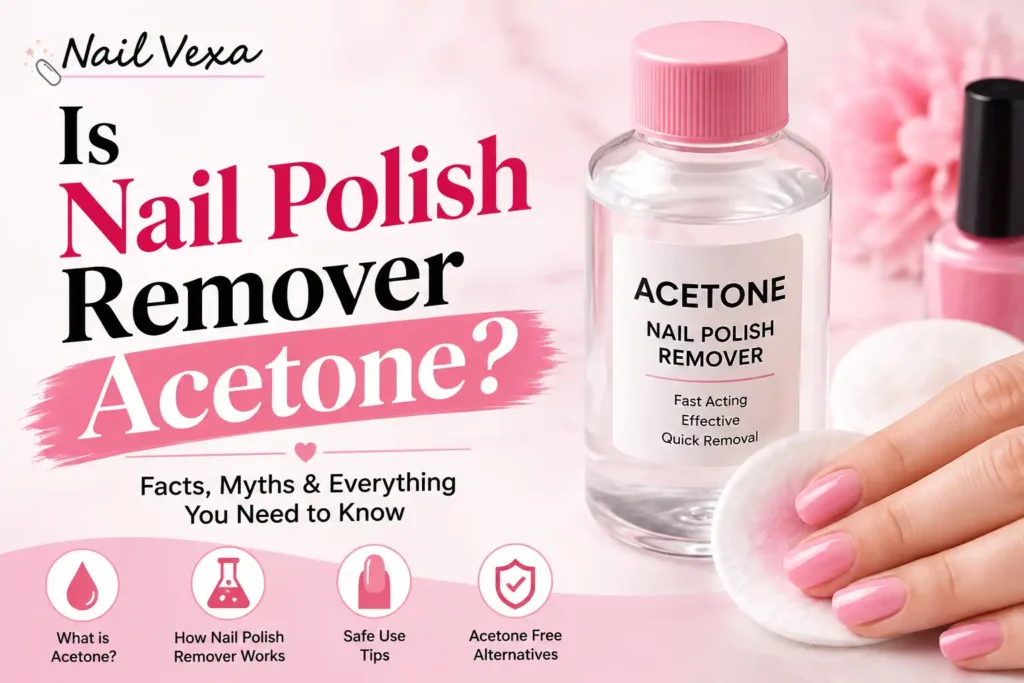
If you’ve ever glanced at the label on your nail polish remover and wondered, “is nail polish remover acetone, or something else entirely?” – you’re not alone. It’s one of the most searched questions in the beauty world, and the answer isn’t as simple as a yes or no.
In short: most traditional nail polish removers do contain acetone, but not all of them are pure acetone, and not all removers use it at all. In this guide, we’ll break down exactly what’s in your remover bottle, how acetone-based formulas differ from non-acetone ones, and how to choose the safest option for your nails.
What Is Nail Polish Remover Actually Made Of?
To understand whether nail polish remover is acetone, it helps to look at what actually goes into the bottle. Acetone is a fast-acting solvent that breaks down the polymers in nail lacquer, which is why it works so quickly and effectively. It’s the same chemical compound used in some industrial cleaning products, just in a much more diluted, cosmetic-grade form.
But acetone rarely appears alone. Most commercial formulas combine it with:
- Water – to dilute the solvent and reduce harshness
- Fragrance – to mask acetone’s strong chemical smell
- Conditioning oils (like vitamin E, jojoba, or glycerin) – to offset dryness
- Preservatives – to extend shelf life
So while acetone is typically the active ingredient responsible for dissolving polish, the rest of the formula is designed to make the experience gentler on your skin and nails.
Acetone vs. Non-Acetone Nail Polish Remover
This is where most of the confusion comes from. Not every remover on the shelf is acetone-based, and the difference matters more than people think.
Acetone-Based Removers
These contain acetone as the primary solvent, often at concentrations between 30% and 100%. They work fast, cut through even stubborn or dark polish in seconds, and are the go-to choice for gel and acrylic nail removal.
Non-Acetone Removers
Instead of acetone, these typically use ethyl acetate or methyl ethyl ketone (MEK) as the solvent. They’re gentler, less drying, and often marketed toward people with sensitive skin, weak nails, or artificial enhancements that acetone can damage.
| Feature | Acetone-Based | Non-Acetone |
| Speed | Fast | Slower |
| Dryness | Higher | Lower |
| Best for | Gel, acrylic, dark polish | Natural nails, sensitive skin |
| Smell | Strong, chemical | Milder |
Is Pure Acetone the Same as a Nail Polish Remover?
Not exactly. Pure acetone (100%) is the raw solvent itself – it hasn’t been blended with water, oils, or fragrance. Many people buy pure acetone separately for DIY gel or acrylic removal because it’s stronger and more effective than a pre-mixed remover.
Store-bought nail polish remover, on the other hand, is a formulated product that contains acetone alongside other ingredients meant to soften its impact on skin and nails. So when someone asks “is nail polish remover acetone,” the more accurate answer is: it often contains acetone, but it isn’t necessarily pure acetone.
Is Acetone Nail Polish Remover Safe to Use?
For most people, occasional use of acetone-based remover is considered safe. However, acetone is a strong solvent, and repeated or prolonged exposure can cause:
- Dry, brittle nails
- Cracked or irritated skin around the cuticles
- A temporary chemical smell on the skin
- Increased nail breakage over time with frequent use
Safety tips when using acetone remover:
- Use it in a well-ventilated space
- Avoid soaking nails longer than necessary
- Moisturize hands and cuticles immediately after
- Limit acetone use to when you’re actually removing polish, not for general cleaning
People with very dry skin, eczema, or extremely thin or damaged nails may want to opt for non-acetone alternatives instead.
How to Remove Nail Polish With Acetone (Step-by-Step)
If you’ve decided acetone is the right choice for your polish removal, here’s the most effective method:
For regular nail polish (soak method):
- Soak a cotton pad in acetone remover
- Press it against the nail for 10–15 seconds
- Wipe from base to tip in one motion
- Repeat as needed until all polish is gone
- Moisturize immediately after
For gel or acrylic polish (foil method):
- Gently buff the top coat to break the seal
- Soak a cotton pad in acetone and place it on the nail
- Wrap each finger in foil to trap heat and moisture
- Wait 10–15 minutes
- Gently push off the softened polish with a cuticle stick
How to Remove Nail Polish Without Acetone
If you’d rather skip acetone altogether, there are a few gentler options:
- Non-acetone remover – slower but far less drying
- Rubbing alcohol – works on light or fresh polish
- Hairspray or white vinegar soaks – natural, slower alternatives for occasional use
- Double-sided tape trick – lifts polish without any liquid solvent
These methods take more time and effort but are worth considering for anyone managing sensitive skin, weakened nails, or frequent manicure changes.
Acetone vs. Non-Acetone: Which Should You Choose?
Here’s a quick way to decide:
- Choose acetone-based remover if: you have gel, acrylic, or dark/stubborn polish that needs fast removal
- Choose non-acetone remover if: you have sensitive skin, brittle nails, or remove polish frequently
- Choose pure acetone if: you’re doing a full gel or acrylic soak-off at home
There’s no universally “better” option – it depends on your nail type, polish type, and how often you’re removing color.
FAQs: Is Nail Polish Remover Acetone?
1. Is nail polish remover the same as acetone?
Not always. Many nail polish removers contain acetone as an ingredient, but they’re formulated with water, oils, and fragrance rather than being pure acetone.
2. Is 100% acetone bad for your nails?
Used occasionally, it’s generally safe, but frequent use can dry out nails and surrounding skin. Moisturizing afterward helps offset this.
3. Can I use regular nail polish remover instead of acetone for gel nails?
Non-acetone remover is far less effective on gel or acrylic polish. For gel removal, acetone-based remover or pure acetone is recommended.
4. Why does nail polish remover smell like acetone?
Because acetone is often the primary active solvent in the formula – the fragrance added is simply there to soften that smell.
5. How often is it safe to use acetone nail polish remover?
Most dermatologists suggest limiting acetone use to once every 1–2 weeks to avoid excessive dryness and nail damage.
Final Thoughts
So, is nail polish remover acetone? In most cases, yes – acetone is the key ingredient responsible for breaking down polish quickly and effectively. But not every remover is created equal, and understanding the difference between acetone-based, non-acetone, and pure acetone formulas can help you protect your nails while still getting a clean, polish-free finish.
Whether you’re removing a quick manicure or a stubborn gel set, choosing the right formula for your nail type makes all the difference – and now you know exactly what to look for the next time you pick up a bottle.