

If you’re constantly trimming your fingernails or scheduling manicure appointments more frequently than expected, you’re experiencing what dermatologists call “accelerated nail growth.” This phenomenon is more common than you might think, affecting millions of individuals worldwide.
The question “why do my nails grow so fast” isn’t just about convenience-it often reflects positive health indicators including strong metabolism, good nutrient absorption, and optimal circulatory function. However, nail growth varies dramatically between individuals, influenced by interconnected biological, environmental, and lifestyle factors.
This guide explores the science behind rapid nail growth, examines the specific factors that influence growth rate, and provides evidence-based insights for managing fast-growing nails.
What Is Normal Fingernail Growth Rate?
Baseline Nail Growth Metrics
Fingernails grow at an average rate of 3.47 millimeters per month, or approximately 0.1 millimeter per day. To contextualize this measurement: if you were to lose a fingernail entirely, it would take approximately 4-6 months for complete regrowth.
Comparison:
- Fingernail growth: 3-4 mm/month
- Toenail growth: 1-1.6 mm/month (60% slower)
- Difference reason: Hands receive greater blood circulation and undergo more frequent use
Growth Rate Variation by Finger Position
Interestingly, growth rates differ between fingers:
- Fastest: Middle finger and ring finger
- Slowest: Pinky finger (approximately 20% slower)
- Dominant hand: Grows 10-15% faster than non-dominant hand
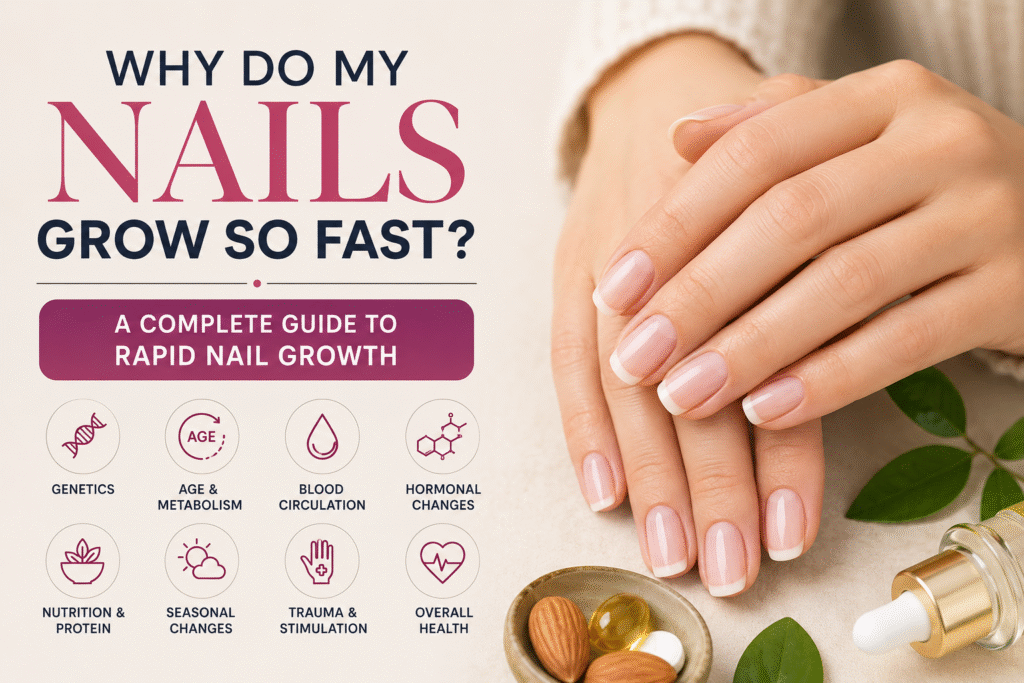
8 Key Factors Affecting Fast Nail Growth
1. Genetics: Your Biological Blueprint
Your inherited DNA represents the primary determinant of nail growth velocity. The nail matrix—tissue responsible for generating new nail cells—operates according to your genetic programming.
What this means: If your parents, siblings, or grandparents have fast-growing nails, you likely inherited this trait. Genetics accounts for approximately 50-60% of growth rate variation between individuals.
2. Age and Metabolic Activity
Nail growth follows a predictable age-related pattern:
- Ages 0-30: Peak nail growth rates due to optimal metabolic function
- Ages 30-50: Gradual decline (approximately 5-10% decrease per decade)
- Ages 50+: More pronounced slowdown (up to 30% reduction)
Scientific basis: A 1980 study tracking one researcher’s nail growth over 35 years documented growth declining from 0.123 mm/day at age 23 to 0.095 mm/day at age 67-a 23% reduction.
3. Blood Circulation and Vascular Supply
The nail bed contains abundant capillaries delivering oxygen and nutrients to the nail matrix. Enhanced blood flow directly accelerates cell production.
Activities increasing fingertip circulation:
- Cardiovascular exercise (increases overall circulation)
- Occupational hand activities (typing, playing instruments)
- Manual labor and repetitive hand movements
- Finger massage and cuticle oil application
Condition: Poor peripheral circulation from conditions like Raynaud’s syndrome or diabetes typically reduces nail growth rates by 20-40%.
4. Hormonal Fluctuations
Hormones profoundly influence nail growth rate:
Pregnancy: Women experience dramatic estrogen and progesterone increases, resulting in nail growth acceleration of 25-35%. However, lactation reverses this effect, slowing growth post-pregnancy.
Puberty: Growth peaks during adolescence when hormonal changes are most dramatic.
Thyroid function: Both hyperthyroidism and hypothyroidism alter growth rates by affecting basal metabolic rate.
Menstrual cycle: Some individuals report subtle monthly growth fluctuations correlating with hormonal phases.
5. Nutritional Status and Protein Intake
Nails are 95% protein (keratin), making dietary protein fundamental to growth.
Essential nutrients for nail growth:
| Nutrient | Function | Food Sources |
|---|---|---|
| Protein | Keratin production | Eggs, fish, lean meat, legumes |
| Biotin | Nail strengthening | Eggs, almonds, sweet potatoes |
| Iron | Oxygen transport | Spinach, beef, lentils |
| Zinc | Cell division | Pumpkin seeds, oysters, chickpeas |
| Vitamin E | Antioxidant protection | Almonds, avocado, olive oil |
| Magnesium | Cellular function | Spinach, pumpkin seeds, dark chocolate |
Clinical evidence: A 2007 study found biotin supplementation (2.5 mg daily) improved nail thickness by 25% and reduced breakage by 35%.
6. Seasonal and Environmental Changes
Nail growth exhibits marked seasonality:
- Summer peak: 20-25% faster growth (May-September)
- Winter reduction: 15-20% slower growth (December-February)
Mechanisms:
- Increased ambient temperature enhances peripheral blood flow
- Greater sun exposure stimulates vitamin D production
- Higher metabolic rates in warmer months
- Increased outdoor activity elevates overall circulation
7. Trauma and Mechanical Stimulation
Contrary to intuition, nail trauma stimulates growth through compensatory healing mechanisms:
- Nail biting (onychophagia): Associated with 10-15% faster growth
- Frequent clipping: Creates microtrauma stimulating circulation
- Accidental injury: Triggers increased nutrient delivery for repair
However, this stimulation is temporary, returning to baseline after healing.
8. Health Status and Systemic Conditions
Chronic conditions impact nail growth significantly:
Conditions increasing growth:
- Hyperthyroidism
- Fever or acute infection (temporary)
- Pregnancy-related hormonal changes
Conditions decreasing growth:
- Hypothyroidism
- Psoriasis
- Lupus
- Kidney disease
- Liver disease
- Diabetes and circulatory disorders
- Malnutrition
What Fast Nail Growth Reveals About Your Health
Positive Health Indicators
Fast-growing nails typically suggest:
- ✓ Optimal metabolic function
- ✓ Good nutritional status
- ✓ Strong cardiovascular circulation
- ✓ Balanced hormone levels
- ✓ Efficient cellular turnover
Warning Signs Requiring Medical Evaluation
Consult a dermatologist if fast growth accompanies:
- Yellow or white discoloration
- Brittleness or peeling
- Separation from nail bed
- Ridging or texture changes
- Pain or inflammation
- Sudden growth rate changes
Frequently Asked Questions (FAQ)
Q: Is it bad if my nails grow too fast?
Fast growth without accompanying symptoms indicates good health. Concerns arise only if accompanied by discoloration, weakness, or pain.
Q: Can I slow down my nail growth?
Limiting hand activity slightly reduces growth, but genetic factors dominate. Most people find regular trimming more practical than attempting to slow growth.
Q: What’s considered abnormally fast?
Requiring trimming more than twice weekly (beyond the 3.47 mm/month average) exceeds typical range. Seek medical evaluation if accompanied by other changes.
Q: Does diet really affect nail growth?
A: Yes. Protein and biotin intake directly correlate with growth rate and nail quality. Deficiencies slow both growth and strength.
Q: Why do nails grow faster in summer?
A: Increased temperature, sunlight exposure, and activity levels boost circulation and metabolic rates seasonally.
Managing Fast-Growing Nails: Practical Strategies
Maintenance Routines
- Trim fingernails every 7-10 days to maintain desired length
- Use sharp, clean nail clippers to prevent breakage
- File nails smoothly to reduce chipping
- Keep cuticles moisturized with nourishing oils
Preventative Care
- Apply strengthening base coat before nail polish
- Wear protective gloves during household tasks
- Minimize exposure to harsh chemicals
- Hydrate nails with cuticle oil daily
Nutritional Optimization
- Consume 25-30g protein daily
- Include biotin-rich foods regularly
- Consider biotin supplementation (consult healthcare provider)
- Maintain balanced micronutrient intake
Understanding Your Fast-Growing Nails
Rapid nail growth represents a window into your body’s metabolic efficiency, nutritional status, and overall wellness. While genetics establish your baseline growth rate, optimizing nutrition, circulation, and general health supports your nails’ full growth potential.
For individuals with fast-growing nails, the key is implementing consistent maintenance routines while appreciating that this characteristic typically indicates positive health status. If growth patterns change suddenly or accompany other symptoms, professional dermatological evaluation ensures any underlying conditions receive appropriate attention.
Next steps: Track your nail growth for one month, note growth patterns, and implement evidence-based nutritional strategies to maintain optimal nail health.